Why this Blog?

A place where I can lament the changing times; for eccentric comments on current affairs and for unfashionable views, expressed I hope, in cogent style; also occasional cris de coeur largely concerned, I regret to say, with myself.


Comments

I welcome your comments, so do please write. Please note however that all comments are moderated prior to publication. Whilst I fully appreciate that life can be frustrating, nevertheless, abuse, SMS language and illiteracy will not be tolerated!
Showing posts with label First World War. Show all posts

Monday, 17 February 2014

617: Paxman, the BBC and the First World War

Two weeks ago, I wrote a very sceptical piece about the BBC's First World War series presented by Mr Jeremy Paxman.

Having watched this evening the final programme in the series, I must say that Paxman's presentation had great sensitivity, and slightly to my surprise, due credit was given in respect of the appalling sacrifice made by Britain's great landed families.  Please understand that I in no way wish to belittle the enormous suffering and sacrifice made by the millions of others involved in the terrible carnage.  However the fact remains that as Paxman pointed out, the young lieutenants, many of whom came from the upper classes were five times more likely to die than the average "Tommy," as of course the junior officers were required to lead from the front.  And further to his credit, Paxman pointed out that for we who can have no conception of what the times were like, it is too easy to "snigger" at these sometimes seemingly foolhardy gestures of patriotism, whereas in fact enormous courage and bravery prevailed.  This was well said.

All well and good, but then I got angry when he told us about the "1,000,000 acres that went under the hammer" as a result of death duties. Great: you go over to France or Flanders to fight for your country, lead from the front, get shot or blown up and then the government confiscates your family's estates.
 
And we end up with him telling us that the country after the war was "more democratic."

Oh really?  No it wasn't:  all that happened over the years was that the traditions of class and duty were replaced with a lot of nasty, grasping, greasy pole merchants, many of whom rule us today.

Reflect on the past and weep my friends.

Yes it does make me bitter.

Until the next time.

Tuesday, 4 February 2014

608: As I Suspected

I watched, the other night, Jeremy Paxman's beautifully presented programme entitled The War Machine.

I do not feel that the quality of the presentation was matched by the content.  There was little about the higher direction of the war, although Lloyd George received honourable mentions for his successful  efforts in increasing production of munitions.

The majority of the programme, to my jaundiced eyes at least carried a distinctly left-of-centre flavour, with far too much time for example being given to a pair of frightful Scottish communists (well they sounded like communists) who attempted to justify the strike action taken in Glasgow by shipyard workers in 1915.

As readers here know, I consider that the First World War was a terrible mistake, but the country having become involved in the war, then strike action (and there was plenty in the 1939-1945 conflict too) is disgraceful.

Anyone who can be bothered to read Corelli Barnett (Audits of War etc.) will discover that it was stone-age individuals like those two losers who largely contributed to the destruction of the ship-building industry in this country - and not only ship-building.  We are seeing the same sort of Luddite attitude today in the strikes on the London Underground; I despair of this country sometimes.

I still have a sort of forlorn hope that subsequent programmes will a) intelligently consider grand strategy, b)not spend their entire allotted time on hoi polloi and c) not recycle the usual rubbish that all the generals were hopelessly incompetent.  I also hope for NO MUSIC; the BBC insists in its historical programmes in adding music everywhere.  Why?

Until the next time

Saturday, 1 February 2014

606: A Bit "Previous" - The First World War

In a post here two years ago concerning the marking of the 100th anniversary of the sinking of the Titanic, I wrote the following:

And reflecting on the saturation coverage makes me tremble when I ponder what extraordinary levels of excess the world's media will reach when we arrive at the 100th anniversary of the start of the "War to end all wars."

Well, well.  My understanding is that the BBC is planning four years of coverage - coverage which, rather like this post has begun early.

Given my well-known reactionary views, I am concerned that there will be a great deal of revisionist rubbish written - this perfectly natural suspicion having been reinforced by the BBC's publishing of a piece written by one Dr Gary Sheffield.  Dr Sheffield's piece ends with the following paragraph:

Far from being fought over trivial issues, World War One must be seen in the context of an attempt by an aggressive, militarist state to establish hegemony over Europe, extinguishing democracy as a by-product. To argue that the world of 1919 was worse than that of 1914 is to miss the point. A world in which Imperial Germany had won World War One would have been even worse.

Whilst I accept that the point might be arguable, I consider this statement to be bollocks.    Several historians have opined (sorry I do not have the sources) that had the "Miracle of the Marne"  not occurred and in consequence, the Imperial German Army had taken Paris in 1914, then there would have been an armistice, some minor adjustments of borders perhaps and everyone would have gone home - at least in the West.  Then what? No bloody Lenin and his genocidal successor, no bloody Hitler, maybe no ghastly slump etc., etc.

Further the article repeatedly drones on about "democracy" which is a word, as holy today (almost anyway) as "Issslaaam"  (a funny point in itself, on reflection).  The implication that somehow the Allies were "fighting for democracy" is at the very least mischievous, if not downright erroneous.

The Allies, and indeed the Central Powers, were fighting because the whole of pre-war Europe was, as a result of complex alliances, a powder-keg waiting for a spark to set it off.  I will concede that the self-aggrandising character of Kaiser Wilhelm II and his unwillingness to restrain Austria were major contributing factors.

I consider the First World War ultimately to have been a tragic failure of diplomacy, not of democracy!

Finally, try to find the time to read this piece.  It was written in 1928 by Arthur (later Lord) Ponsonby, a Labour politician and incidentally father of tragic "bright young thing" Elizabeth Ponsonby.  Ponsonby's piece puts the lie to many myths about the war.  Myths have a knack of being very persistent - think of King Richard III...

Until the next time.

Tuesday, 10 April 2012

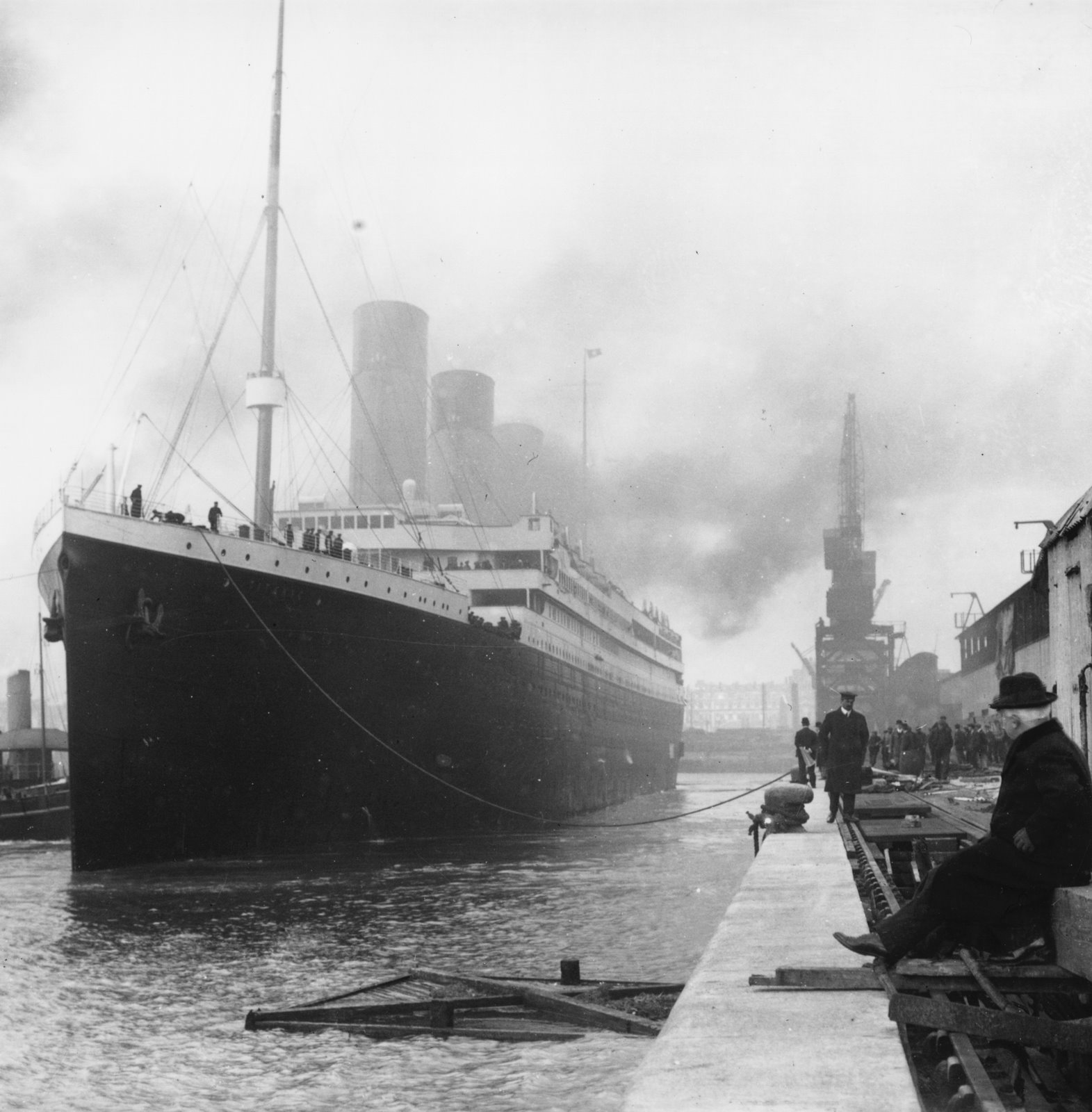
If You Think This is Bad Wait until 2014


Yes, I know, we've all seen this picture - how many times?

The centenary of the the tragic maiden voyage of the famous White Star liner has occasioned a staggering amount of attention - far in excess of its historical significance.  Certainly, 1500 lives were lost, but then that was just 10% of the number lost at Bhopal after the appalling Union Carbide disaster - and how often does one hear about that?

And reflecting on the saturation coverage makes me tremble when I ponder what extraordinary levels of excess the world's media will reach when we arrive at the 100th anniversary of the start of the "War to end all wars."

Until the next time (if there is one)


[11 & 10]